
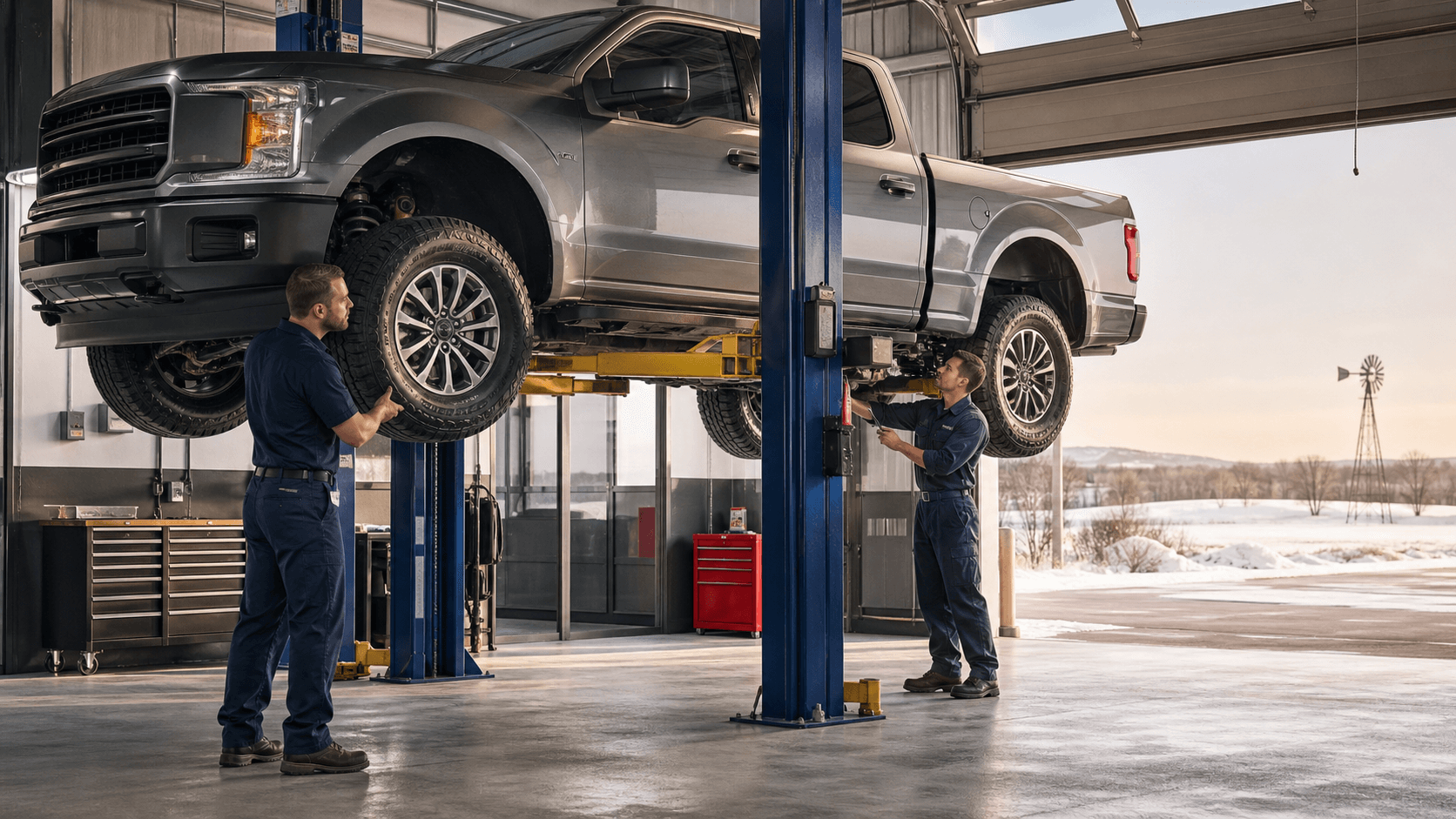
A Winter-Ready Ford Starts Before the First Freeze
Professional Ford service helps prepare your vehicle for Oklahoma winter by checking the systems cold weather puts under the most strain. Winter readiness is not one item on a checklist. It is a practical look at starting power, fluids, heat, tires, brakes, wipers, lights, and other parts that affect daily driving in cold, wet conditions.
Around Broken Arrow, Tulsa, Owasso, Bixby, and Sand Springs, temperatures can change quickly. A mild afternoon may lead to a freezing morning, slick bridges, heavy rain, or a commute on roads that have not fully dried. During a service visit, we can identify worn or weak components before they turn into a no-start situation, poor visibility, or another concern when the weather turns.
Maintenance can support reliability, traction readiness, visibility, and peace of mind. It cannot remove the risk of ice, standing water, or unsafe road conditions. We recommend pairing a well-maintained vehicle with slower speeds, more following distance, and close attention to weather alerts.
Cold Weather Tests the Systems You Rely on Most
Cold weather makes a healthy battery work harder. Available starting power can drop as temperatures fall, while the engine may need more energy to start. If you have noticed slow cranking, dim lights, or a battery warning light, we can inspect battery condition, terminals, cables, and charging-system output.
Fluid and cooling-system checks matter, too. Our technicians can review engine oil condition, coolant level and condition, hoses, belts, and visible leaks. Your owner's manual and Ford maintenance schedule remain the right guide for vehicle-specific fluid needs and service intervals, since the right service can vary by model, mileage, and powertrain.
Comfort and clear glass also depend on a working HVAC system. Weak heat, unusual smells, poor airflow, or windows that will not clear may point to a concern worth inspecting before a harder freeze arrives.
Ford Service in Broken Arrow Begins with a Clear Inspection
A useful winter service visit begins with your concerns. We review what you have noticed, inspect relevant systems, consider manufacturer-recommended maintenance, and perform testing when it fits the concern. The exact approach should reflect your Ford model, mileage, warning lights, driving habits, powertrain, and prior service history.
When repairs are needed, a Ford dealership can provide access to model-specific service information, technical updates, recall status, Ford diagnostic equipment, and genuine Ford or Motorcraft parts designed for the vehicle. Not every repair must be completed at a dealership, but those resources can be helpful when a concern involves a Ford-specific system or warning message.
Mention any symptoms you have noticed before service begins, including:
- Slow cranking or a battery warning light
- Reduced heater output or fogged windows that will not clear
- Brake noise, pulling during braking, or vibration
- Low tire-pressure warnings or fluid spots under the vehicle
- Wiper streaking or poor exterior-light performance
Clear details help us focus the inspection on the systems most likely involved.
Tires, Brakes, and Visibility Support Safer Winter Drives
Tire care means more than adding air when a warning light appears. We look at tread depth, uneven wear, tire age, and inflation based on the driver-door placard. Tire pressure often drops with outdoor temperatures, and tires should be checked when cold. The tire-pressure monitoring system is helpful, but it does not replace routine tire inspections.
Brakes deserve the same attention. Technicians can inspect pads, rotors, brake-fluid condition, hoses, and brake-system concerns when appropriate. Even well-maintained brakes cannot create traction on ice. Still, responsive brakes and properly maintained tires give you the best possible control for the conditions.
Visibility checks should include:
- Wiper blade condition and washer-fluid level
- Front and rear defroster operation
- Exterior lights, headlamp lenses, and mirrors
- Washer fluid rated for freezing temperatures, not plain water
A windshield that only streaks a little during fall rain can become a much bigger problem during a freezing early-morning drive on the Broken Arrow Expressway or local highways.
Plan for Trucks, Diesels, Hybrids, and EVs
Winter preparation can look different for a Ford truck that handles work, towing, or rural travel. F-150, Ranger, Maverick, and Super Duty owners should consider heavier loads, trailer use, tire condition, brake performance, lighting connections, and a plan for unexpected road conditions. Winter equipment and cargo can affect capacity, so we recommend following Ford towing guides along with your vehicle's payload and towing ratings.
Super Duty diesel owners should follow the owner's manual for cold-weather operation and use the correct diesel fuel and diesel exhaust fluid. Battery condition matters especially when cold starts are part of the routine. Depending on the vehicle, fuel-filter and water-separator service needs may also deserve attention. Recommendations on additives and cold-start procedures can vary by model year and conditions, so there is no one-size-fits-all answer.
Hybrid and electric Ford owners can benefit from planning ahead as well. Cold weather may affect driving range and cabin-heating energy use. We recommend considering route distance, charging time, charging equipment, tire condition, washer fluid, and cabin climate settings. For applicable vehicles, FordPass may help you monitor vehicle information and use connected features, subject to availability and connectivity.
Prepare Before Weather Disrupts Your Routine
Early November, or before a forecasted cold snap, is a sensible time to address due maintenance or warning signs. A proactive service visit gives you time to understand recommended repairs and make informed decisions before a workday, travel plan, or severe-weather period becomes more complicated.
Pay attention to slow starts, battery alerts, low tire pressure, braking concerns, weak heat, leaking fluids, poor wiper performance, and dashboard messages. Even without symptoms, your owner's manual, Ford maintenance schedule, and service history can help show what preventive care is due. Safe winter driving starts with preparation, then continues with patient decisions behind the wheel when roads are cold, wet, or icy.
Get Seasonal Care From Ford-Trained Technicians
At Jim Norton Ford, our team can help you address winter-related concerns and keep your vehicle maintained for the miles ahead. Schedule Ford service in Broken Arrow for a professional inspection, routine maintenance, or attention to a specific warning sign. We can review your vehicle's needs, explain recommended work clearly, and help you make an informed service decision.