Ford F-150 vs. Chevy Silverado 1500 for Work in Broken Arrow, OK
Both the Ford F-150 and the Chevrolet Silverado 1500 can handle towing, hauling, commuting, and jobsite work. The F-150 offers distinctive options including available hybrid capability and available Pro Power Onboard. The Silverado 1500 offers its own gasoline and available diesel powertrains along with its own work-oriented configurations. Neither truck is the right answer in every case. The better choice depends on the specific configuration and the workload you actually carry, so compare similarly equipped trucks and confirm ratings on the individual vehicle.
F-150 vs. Silverado 1500 at a Glance
The table below reflects 2026 model year information published by each manufacturer. Every figure is configuration-dependent, and the maximums shown apply only to specific builds with required equipment. They are not the rating of any particular truck on a lot.
| | Ford F-150 (2026) | Chevrolet Silverado 1500 (2026) | |
|---|---|---|
| Engine choices | Six engine offerings, including turbocharged V6 and V8 options, varying by trim and configuration | Four engine offerings, including a turbocharged four-cylinder, two V8s, and a turbo-diesel inline-six, varying by trim |
| Hybrid availability | Available PowerBoost full hybrid on select configurations | Not offered on the gas or diesel Silverado 1500 lineup |
| Diesel availability | Not offered | Available Duramax 3.0L turbo-diesel on select configurations |
| Onboard power | Available Pro Power Onboard; output varies by engine and configuration, with the highest output tied to the hybrid powertrain | Power outlets available depending on configuration; confirm current offerings in Chevrolet specifications |
| Maximum conventional towing | Up to 13,500 lbs. when properly equipped, on specific configurations only | Up to 13,300 lbs. when properly equipped, on specific configurations only |
| Maximum payload | Up to 2,440 lbs. on specific configurations only | Up to 2,260 lbs. on specific configurations only |
| Cab and bed choices | Regular, SuperCab, and SuperCrew cabs with multiple bed lengths, varying by trim | Regular, Double, and Crew Cab with multiple bed lengths, varying by trim |
| Often considered for | Buyers wanting hybrid or onboard jobsite power, or the broadest engine menu | Buyers wanting a diesel option or a specific gasoline engine and configuration |
Two points matter more than the table. First, the gap between the published towing maximums is small, and it disappears entirely once you compare two real trucks with different engines, axles, cabs, and beds. Second, payload is usually the limit a working truck hits first, and it is printed on the individual vehicle rather than derived from a brochure.
Define the Job Before Comparing Trims
Before comparing trim names or appearance packages, define your main use. A truck that feels great on a daily commute may not be the best setup for carrying heavy tools every day or towing an enclosed trailer several times a week.
Start by writing down the work your truck must handle most often:
- Your heaviest loaded trailer, not the empty trailer weight
- Typical bed cargo, including tools, materials, and accessories
- Number of passengers or crew members
- Your daily route and the job sites you reach most often
- Expected annual mileage and how often you tow
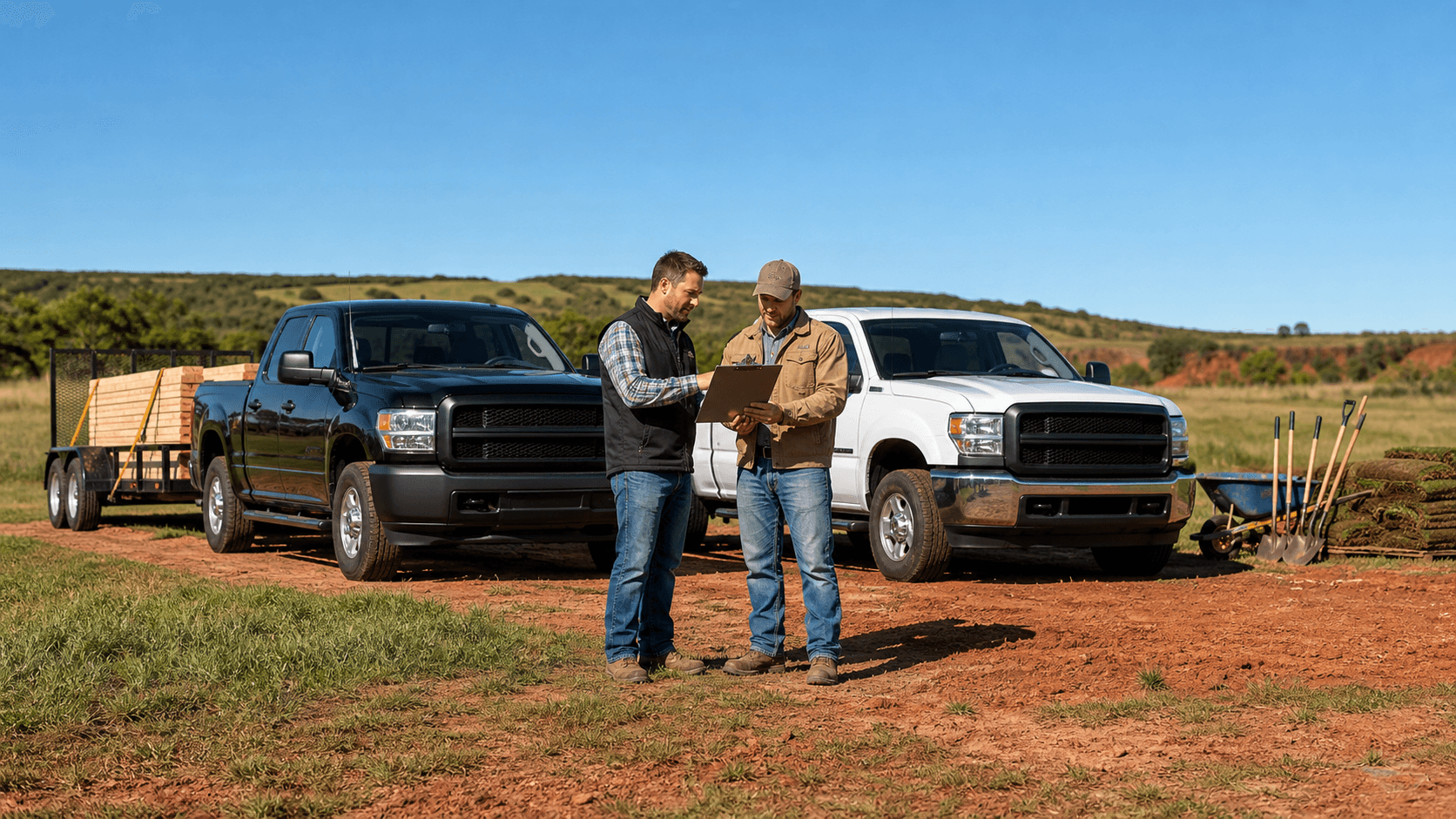
A contractor who carries tools daily may value secure interior storage, bed organization, and payload. A landscaper pulling an enclosed trailer may focus more on towing equipment, cooling capability, and hitch setup. Ranch and acreage owners may need room for feed, fencing materials, and equipment, while a family towing a boat or camper may place more value on rear-seat comfort and highway manners.
For many local jobs, a properly equipped half-ton truck can be a practical choice. Regular heavy commercial towing or unusually heavy cargo may instead call for an F-Series Super Duty or a comparable heavy-duty pickup.
Towing and Payload Decide the Hardest Jobs
Maximum towing ratings vary widely within both lineups. Engine, cab size, bed length, drivetrain, axle ratio, wheels, tow package, and other equipment all affect what a specific truck can pull. Review the manufacturer documentation for the exact truck being considered rather than relying on a broad online maximum. Ford publishes a model-specificF-150 towing guide and a broaderRV and trailer towing guide, and Chevrolet publishes an annualtrailering guide with weight ratings by configuration.
Payload is just as important and often overlooked. Payload includes everyone in the cab, tools, cargo, bed accessories, hitch equipment, and trailer tongue weight. The payload label on the individual truck matters more than a general figure advertised for a different configuration. On both trucks, that information appears on a label in the driver's door area, and it is specific to the vehicle in front of you.
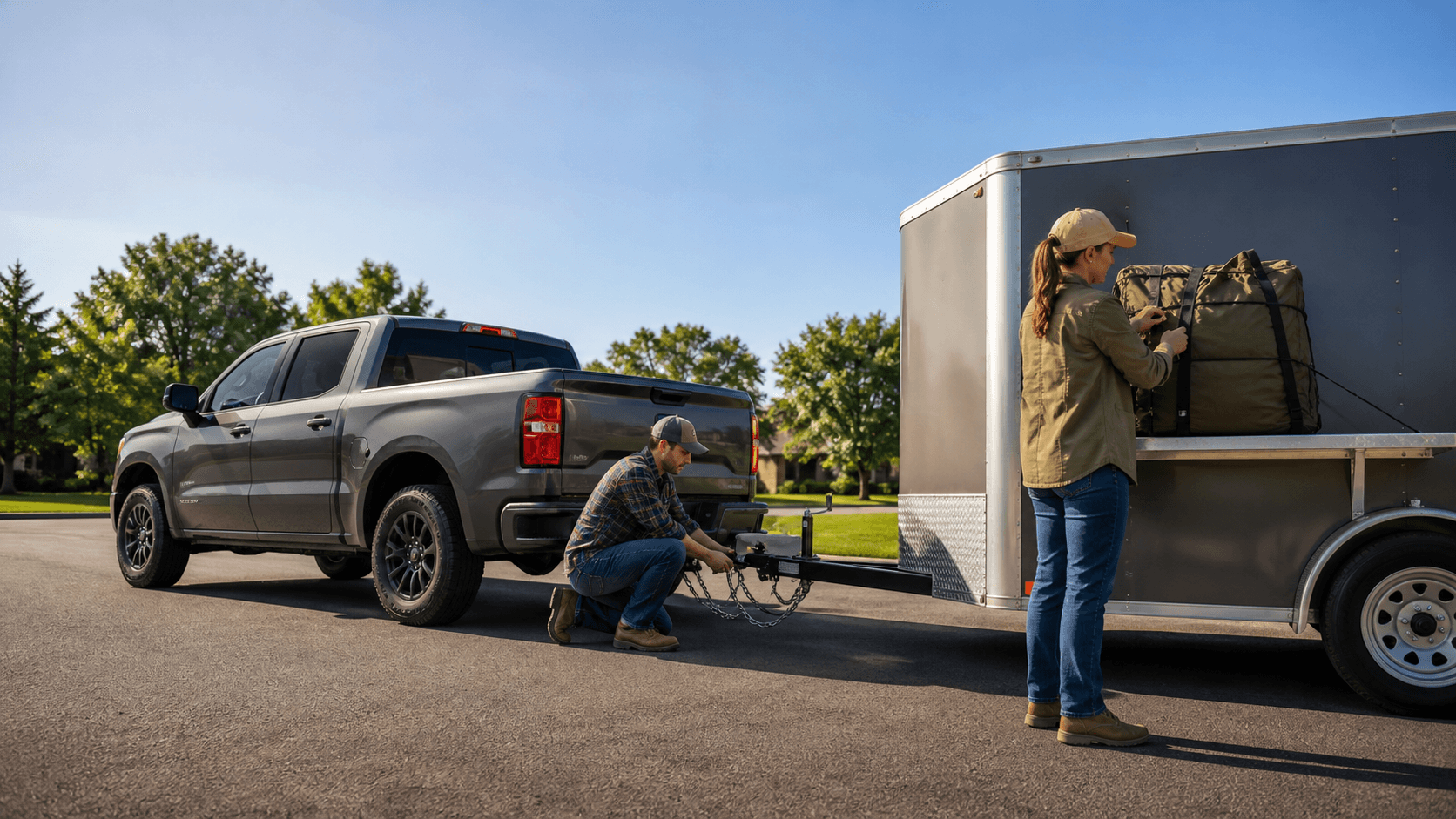
A loaded equipment trailer creates a very different demand than a small utility trailer. The same is true for an enclosed landscaping trailer, a boat headed toward Grand Lake or Lake Eufaula, or a camper loaded for a long weekend. Oklahoma summer heat, long highway stretches, and regular trailer use make tow setup, cooling maintenance, and trailer preparation worth attention. Before heavy towing, check these basics:
- Trailer tire condition and inflation, using thetire safety information published by NHTSA
- Trailer brakes and lighting
- Hitch, ball mount, and coupler ratings
- Truck and trailer weight ratings
- Cooling system condition and maintenance needs
If you are buying a trailer as well as a truck, NHTSA also advises confirming that a trailer carries a label certifying compliance withFederal Motor Vehicle Safety Standards.
Cabs, Beds, and Powertrains Shape Daily Use
Cab and bed choices affect nearly every part of truck ownership. Cab designs change passenger room, rear-seat access, interior storage, and available bed lengths. Exact combinations vary by model year and trim, so sit in the cab with the people and gear you normally carry.
A shorter bed can be easier to park in tight neighborhoods and city lots. A longer bed may better suit lumber, ladders, pipe, feed, fencing supplies, and jobsite materials. If you regularly carry a toolbox, generator, cooler, or storage box, measure it before choosing a bed. Buyers considering a fifth-wheel or gooseneck setup should raise that early, since those loads place pin weight in the bed and interact directly with payload.
On powertrains, match the engine to the work rather than to a single horsepower figure. Frequent towing tends to make low-end torque, cooling equipment, and tow-package details more meaningful than peak output. The F-150 lineup includes turbocharged and V8 gasoline options plus an available hybrid. The Silverado 1500 lineup includes turbocharged four-cylinder, V8, and available turbo-diesel options. Availability varies by trim and configuration in both cases.
For crews that need electricity at a jobsite, available Pro Power Onboard in a properly equipped F-150 is worth considering, with output depending on the engine and configuration selected. Both trucks offer bed organization, tailgate, lighting, and tie-down features that vary by trim. When possible, physically loading your common equipment tells you more than comparing feature lists.
Price the Truck You Need
Starting MSRP is only a starting point. A fair comparison puts similarly equipped trucks side by side, with comparable cab size, bed length, drivetrain, engine, towing equipment, work features, safety technology, and accessories. Comparing a basic work truck with a heavily equipped pickup rarely answers the real buying question.
Final transaction details can also include destination charges, taxes, title, license, optional equipment, and dealer-installed accessories. For financing, consider down payment, trade value research, lease versus purchase needs, commercial financing requirements, and total operating cost. No single payment estimate tells the whole ownership story.
Fleet buyers may also want to weigh maintenance planning, service downtime, common equipment across trucks, and the needs of different drivers. A truck that fits the budget but lacks the needed payload, bed space, or towing setup can create more problems than it solves.
Compare Your Actual Job
The right truck is the one that safely handles your real workload, not the one with the largest advertised figure. Consider an F-150 when its available configurations, towing setup, hybrid or onboard-power options, and ownership resources fit the way you work. Consider a Silverado 1500 when its configuration, engine preference, or pricing structure is a closer match.
An accurate comparison depends on practical details: trailer type, loaded weight, bed cargo, passenger count, daily route, preferred bed length, and budget range. Reviewing towing and payload labels on individual trucks turns a broad F-150 versus Silverado debate into a decision built around your work.
Find the Truck That Fits Your Workday
At Jim Norton Ford, we can help you compare available trims, cab configurations, and capability features for a Ford F-150 in Broken Arrow and review the towing and payload labels on specific trucks. Bring your trailer details and typical load, and we will work through what actually fits. When you are ready to discuss your needs, contact us for personalized assistance.
Frequently Asked Questions
Which tows more, the F-150 or the Silverado 1500?
For the 2026 model year, Ford publishes a maximum of up to 13,500 lbs. for the F-150 and Chevrolet publishes up to 13,300 lbs. for the Silverado 1500, both when properly equipped. Those maximums apply only to specific configurations with required equipment. The rating of any individual truck depends on its engine, drivetrain, cab, bed, axle, and towing equipment, so check the manufacturer guide and the vehicle's own labels.
Does the Silverado 1500 offer a hybrid, and does the F-150 offer a diesel?
The Silverado 1500 gas and diesel lineup does not include a hybrid. The F-150 offers an available hybrid powertrain on select configurations. The F-150 does not currently offer a diesel, while the Silverado 1500 offers an available Duramax turbo-diesel on select configurations.
Where do I find the real towing and payload numbers for a specific truck?
Payload appears on a label in the driver's door area of the individual vehicle. Towing ratings by configuration appear in the current manufacturer towing or trailering guide for that model year. Both are more reliable than a general advertised maximum.
Is a half-ton truck enough, or do I need a heavy-duty pickup?
A properly equipped half-ton truck handles a wide range of work. Regular heavy commercial towing, sustained heavy cargo, or larger gooseneck and fifth-wheel loads may point toward a Super Duty or comparable heavy-duty pickup. The deciding factors are loaded trailer weight, tongue or pin weight, and how often you run at the top of the range.
Why does payload matter more than towing capacity for many buyers?
Payload counts passengers, tools, cargo, bed accessories, hitch hardware, and trailer tongue weight together. A crew of three with a full toolbox and a loaded hitch can consume payload quickly, which limits what the truck can safely tow before the tow rating itself becomes the constraint.
What should I check before towing in Oklahoma summer heat?
Confirm trailer tire condition and inflation, trailer brakes and lighting, hitch and coupler ratings, and the weight ratings for both truck and trailer. Cooling system condition also deserves attention when towing in high temperatures, as does the tow-package equipment on the specific truck.