Start with Fewer Maintenance Surprises
Quick Answer: Should I get a Ford oil change before a road trip?
It depends on where your vehicle sits in its maintenance cycle, not on the trip itself. A road trip does not create a need for an oil change. It simply compresses a lot of miles into a short window, which can move you past your next service interval while you are far from home.
Get the oil changed before you leave if your Intelligent Oil-Life Monitor is reading low, if the trip's mileage would carry you past your next service interval, if you plan to tow, or if you bought the vehicle used and cannot document when the oil was last changed. Also service it first if you have noticed low oil readings, spots on the driveway, or any oil-pressure warning.
You can likely skip it if your Ford was serviced recently, oil life remains high, the trip is short relative to your interval, and the oil level reads normal with no warning messages. Changing oil early does not damage anything, but it does not add protection you were missing either.
Check three things a few days out: your oil-life percentage, your maintenance records, and your oil level. Your owner's manual is the authority for your specific engine. When the answer is unclear, apre-trip inspection settles it faster than guessing.
Before a summer road trip, take a moment to review your Ford's maintenance needs. AFord oil change in Broken Arrow is more than a routine stop. Fresh oil that meets your vehicle's required specification helps lubricate engine parts, manage heat, and carry away contaminants from normal driving.
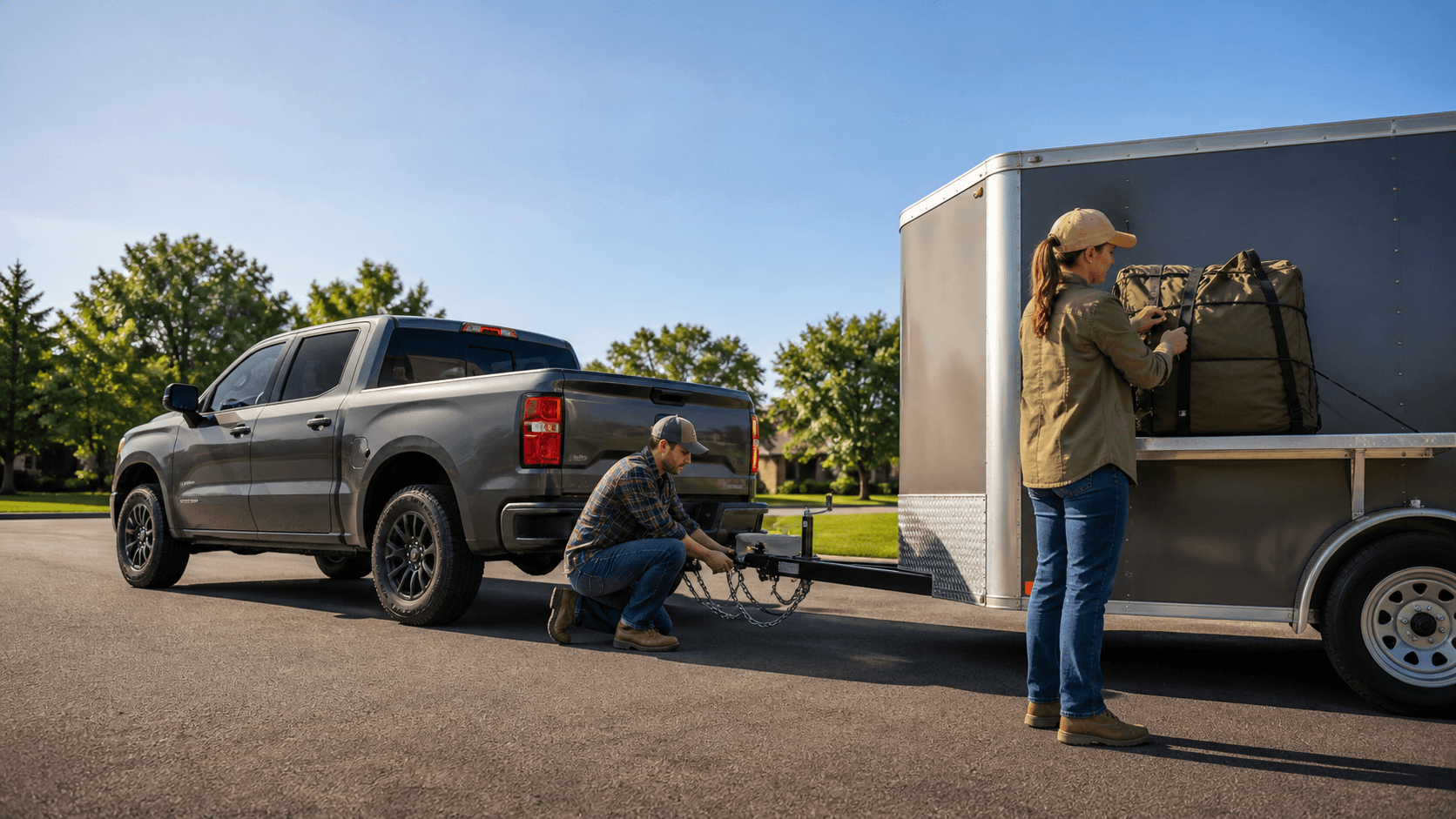
A long trip can add a lot of miles quickly, whether you are heading across Northeast Oklahoma, taking I-44 through Tulsa traffic, or pulling a trailer toward the lake. Hot days, idling, dusty roads, highway speeds, and towing can all make an engine work harder. That does not mean every Ford needs oil service before travel, but it does make a pre-trip review a smart idea.
Oil service cannot stop every possible vehicle problem. Your owner's manual, dashboard messages, and maintenance history are still the best guides. The point is to make an informed choice before leaving home, not rely on guesswork.
Know Whether Your Oil Change Is Due
There is no single mileage rule that fits every Ford. Oil-change needs can vary by model, engine, oil type, driving habits, and operating conditions. Start with the information your vehicle provides.
Many Ford vehicles include an Intelligent Oil-Life Monitor. This system looks beyond miles driven and considers how the vehicle has been used. If the oil-life reading is low and you expect to cover a lot of ground, completing maintenance before the trip may bring more peace of mind.
If your Ford is connected to theFordPass app, you may also see vehicle health and maintenance reminders on your phone, which makes it easier to check oil life a few days ahead instead of discovering a message on the dash the morning you leave.
Consider these questions while planning:
- What oil-life percentage or maintenance message is showing?
- How many miles will your trip add?
- When was the last documented oil service?
- Has the vehicle recently towed, idled for long periods, or traveled on dusty work sites?
A vehicle with plenty of oil life remaining, a normal oil level, and no warning signs may not need an early oil change just because a trip is coming up. On the other hand, a recently purchased pre-owned Ford with incomplete records may deserve a professional maintenance review before it sees extended highway miles.
Should You Get an Oil Change Before Your Trip?
Use the same framework our advisors use. Work through it in order and stop at the first clear answer.
Service it before you go if any of these apply
Oil life is low. If the Intelligent Oil-Life Monitor is showing a low percentage or a change-oil message, the trip will only accelerate what is already due. This is the most straightforward case.
The trip will push you past your interval. Run the arithmetic. A 1,200-mile round trip on a vehicle with 800 miles left before service means you arrive home overdue, or you spend part of the trip looking for a service department in an unfamiliar town.
You are towing. Pulling a camper, boat, or utility trailer increases engine load, heat, and stress. Towing is one of the conditions that shortens service intervals on many vehicles, so check what your owner's manual says about severe-duty schedules.
You cannot document the maintenance history. A pre-owned Ford with gaps in its records is the clearest case for servicing before a long drive. If nobody can tell you when the oil was last changed, you are guessing, and a highway trip is a poor time to find out you guessed wrong.
Something looks or sounds off. Repeated low readings, fluid spots under the vehicle, a burning-oil smell, or an oil-pressure warning all need attention before travel regardless of interval.
You can likely wait if all of these apply:
- The vehicle was serviced recently and you have the record to prove it.
- Oil life remains high and no maintenance message is displayed.
- The trip is short relative to your interval. A weekend to Grand Lake is different from two weeks through several states.
- The oil level reads normal on the dipstick or the electronic display, with no leaks or warning lights.
An early oil change will not harm your engine. It simply spends money on maintenance you would otherwise perform later, without giving you protection you did not already have.
Common Travel Scenarios
| Your situation | Oil change before you go? | Why |
|---|---|---|
| Oil life at 15% or lower, any trip length | Yes | Already due or nearly due, and miles will only accelerate it |
| 1,000+ mile trip, oil life around 40% | Usually yes | You will likely cross the interval while away from home |
| Weekend trip to Grand Lake, oil life 60%+ | No | Well within interval, few miles added |
| Towing a camper or boat any real distance | Usually yes | Added load and heat, and severe-duty schedules may apply |
| Recently purchased used Ford, unknown history | Yes | No baseline to work from, worth establishing one |
| Serviced last month, 500 miles ago | No | Recent service and documented |
| Long trip with heavy stop-and-go and idling | Usually yes | Idling and heat count against oil life faster than steady highway miles |
| Oil-pressure warning light on | Stop and get it inspected | Not an interval question, needs diagnosis before any driving |
If your situation is not on this list, or two rows seem to conflict,schedule a service appointment and let an advisor look at the actual numbers on your vehicle.
Check Oil Level and Watch for Warning Signs
Checking the oil level and deciding that oil needs to be changed are two different things. Oil often darkens as it is used, and color alone does not prove it has reached the end of its service life.
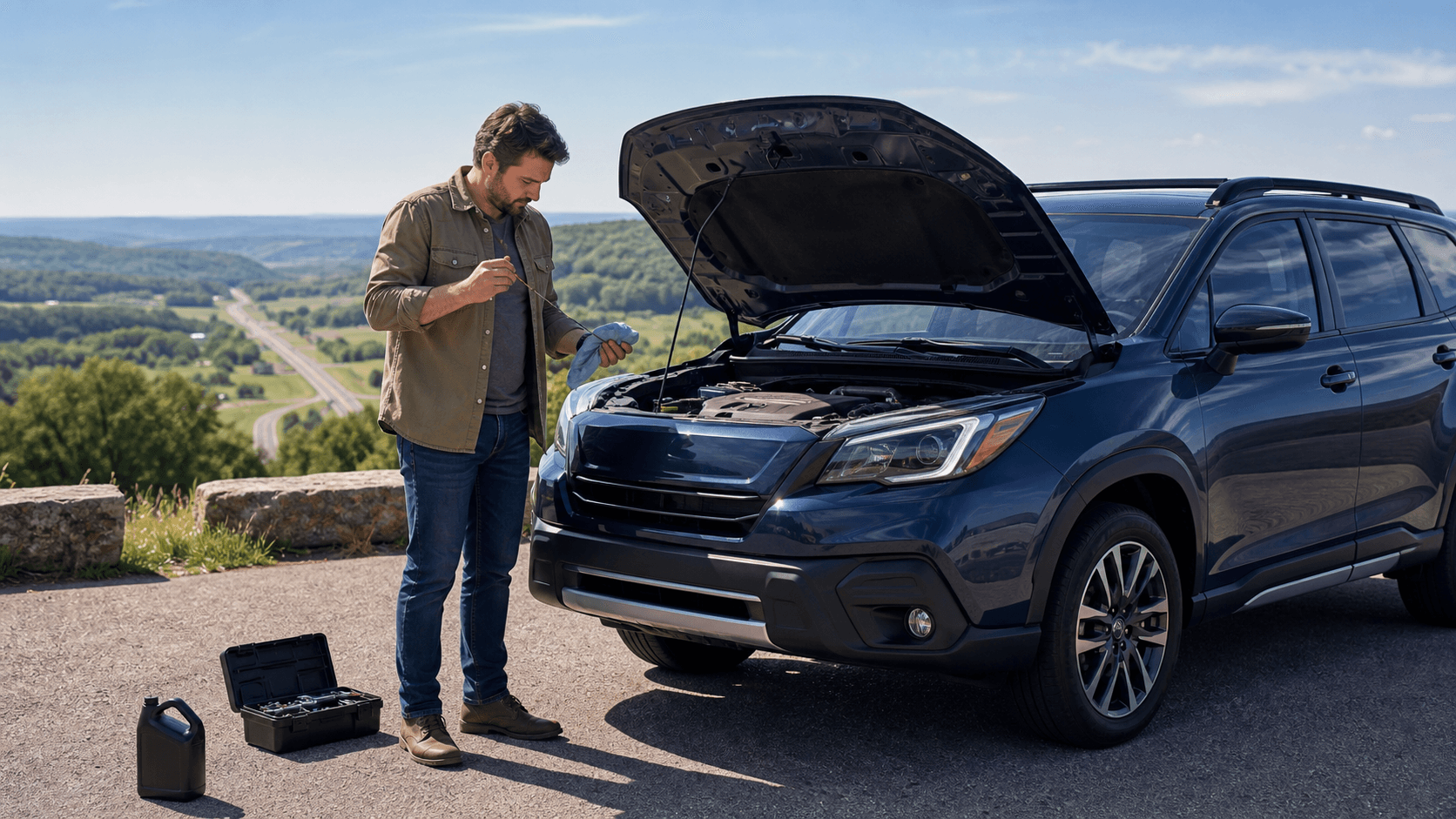
Your owner's manual provides the correct procedure for your model. In general, park on level ground, follow the recommended warm-up and wait time, and use the dipstick if your Ford is equipped with one. The oil should fall within the marked operating range. A low reading may reflect normal oil use, but it can also point to a leak. Avoid adding too much oil.
Pay attention to signs that should be addressed before travel:
- An oil-pressure warning light
- Fluid spots under the vehicle
- A burning-oil smell or unusual engine noise
- Repeated low-oil readings or a recent need to add oil
An oil-pressure warning should never be ignored to keep a travel plan on track. It needs prompt attention. It is also important to use oil with the proper viscosity and Ford-required specification, along with an approved filter, for your specific engine. Motorcraft oil and filters are engineered to Ford specifications for that reason, and using a product that does not meet the requirement listed in your owner's manual can affect performance and maintenance requirements.
Plan for Heat, Towing, and Highway Miles
August heat in Broken Arrow, Bixby, Owasso, Sand Springs, and Tulsa can put added demand on a vehicle, especially in stop-and-go traffic or during extended idling. Engine oil helps reduce friction and manage heat, but it works with the cooling system. An oil change does not replace the need to check coolant condition or investigate overheating concerns.
If you plan to tow a camper, boat, utility trailer, or work equipment, review your Ford's towing and payload ratings in the owner's manual or vehicle information. Proper maintenance and operating within those ratings matter. Heavy use may make it especially worthwhile to review oil life, fluids, brakes, tires, and cooling-system performance before departure.
Think of oil service as one part of road-trip preparation, not a standalone fix. Long highway drives can make small concerns more noticeable than they are during short local errands.
Pair Oil Service with a Pre-Trip Inspection
A pre-trip inspection can help identify visible concerns and review manufacturer-recommended maintenance for your Ford. Recommendations should be clear: what needs attention now, what can be monitored, and why a service is being suggested.
For summer travel, it helps to review:
- Tire tread, tire pressure, and the spare tire
- Brake feel, exterior lights, and windshield wipers
- Battery condition, coolant level, and AC performance
- Windshield-washer fluid for sudden Oklahoma storms
- Belts, filters, and visible leaks
Several of these are worth handling in the same visit. Ourtire center can check tread depth and pressure and handle replacement if you are close to the wear bars, andQuick Lane handles routine maintenance without a long wait. If your Ford runs a Power Stroke diesel, ourdiesel service specials may apply. Currentservice and parts offers are worth checking before you book, since packages that bundle an oil change with a tire rotation and a vehicle checkup are often the better value for pre-trip work.
Outside the service bay, pack roadside supplies, a tire-pressure gauge, charging cables, and any towing equipment you need. Confirm your route, fuel stops, weather conditions, and rest breaks before a longer drive. Those simple steps help make travel feel less rushed.
Common Mistakes to Avoid
Judging oil by color alone. Dark oil is not automatically worn-out oil. Modern detergent additives hold contaminants in suspension, which is the oil doing its job, and some engines darken oil within a few hundred miles. Color tells you very little about remaining service life. The oil-life monitor and your maintenance records tell you far more.
Ignoring the Intelligent Oil-Life Monitor. Some drivers still run on a fixed mileage number they learned decades ago and disregard what the vehicle is reporting. The monitor accounts for how the vehicle has actually been driven, including heat, idling, short trips, and load. It is better information than a number you remember.
Using the wrong oil specification. Not all oil that fits is oil that qualifies. Your engine requires a specific viscosity and meets a specific Ford specification, both listed in the owner's manual. Motorcraft products are formulated to meet those requirements. Substituting on the basis of price or availability can affect performance and, in some cases, your maintenance obligations.
Waiting until departure day. Discovering a leak, worn brakes, or a battery at the end of its life on the morning you planned to leave turns a small job into a ruined start. Parts availability, bay scheduling, and the time to actually perform the work all argue for checking several days ahead.
Getting the oil changed and skipping everything else. An oil change addresses one system. Tires, brakes, battery, coolant, belts, and wipers are the components that more commonly end road trips. Pairing oil service with a full inspection is the point of doing this before you leave rather than after you get back.
Review Maintenance Before You Leave
Check your Ford's oil-life status and maintenance records several days before departure. This is especially helpful if you are near a service interval, preparing to tow, noticing low oil, or planning extended summer travel from the Tulsa area.
At Jim Norton Ford, our service team can help with a Ford oil change in Broken Arrow and review your vehicle's maintenance needs based on its model, condition, and planned use. A clear pre-trip inspection helps you understand recommended work before it begins, so you can leave with a better sense of what your Ford needs.
Frequently Asked Questions
How many miles can I go between oil changes in a Ford?
There is no single number that applies to every Ford. The interval depends on your model, engine, the oil specification it requires, and how you drive. Your owner's manual gives the schedule for your vehicle, and the Intelligent Oil-Life Monitor adjusts based on actual operating conditions. Severe-duty driving, which includes towing, extended idling, and dusty conditions, shortens the interval on many vehicles.
Does the Intelligent Oil-Life Monitor measure the oil itself?
No. It is an algorithm, not a sensor in the oil. It tracks engine operating conditions such as temperature, load, revolutions, and driving patterns, then calculates remaining oil life from those inputs. That is why it is more useful than a fixed mileage number, and also why it still needs to be reset after every oil change.
What happens if I go on a long trip with low oil life?
In most cases, the engine will not fail because you crossed the interval, but oil that has reached the end of its service life is less effective at managing heat and holding contaminants, exactly when a long summer drive is asking more of it. The practical problem is often logistical: you end up looking for a service department in an unfamiliar town rather than handling it at home.
Should I change the oil before towing?
If you are towing any real distance, it is usually worth doing. Towing raises engine load and operating temperature, and many maintenance schedules treat regular towing as severe duty with a shorter interval. Check what your owner's manual says for your specific model, and review brakes, tires, and cooling-system condition at the same time.
Can I just check the oil color to know if it needs changing?
No. Oil darkens as it picks up combustion byproducts, which is the additive package working correctly. Some engines darken oil quickly and it can still have most of its service life left. Use the oil-life monitor and your service records instead, and use the dipstick to check level rather than condition.
What oil does my Ford actually require?
Your owner's manual specifies the viscosity grade and the Ford specification your engine requires, and the two are not interchangeable across models. Motorcraft oil is formulated to meet Ford specifications. If you are unsure what your engine takes, ourparts department can confirm it by VIN.
Is synthetic oil required for my Ford?
It depends on the engine. Some Ford engines specify full synthetic, some specify synthetic blend, and the requirement is stated in the owner's manual. Using a lesser grade than specified is a problem, while using a higher grade than required is generally acceptable but does not extend your interval beyond what the vehicle calls for.
How far ahead of a trip should I schedule service?
Aim for at least several days, and a week is better before a long trip or if you are towing. That leaves time to order a part, address something the inspection turns up, or reschedule if needed. Departure-morning appointments leave no margin for the one finding you did not expect.
What else should be checked before a road trip besides oil?
Tires including the spare, brakes, battery, coolant, air conditioning, wipers, washer fluid, exterior lights, belts, and any visible leaks. In Oklahoma summer heat, battery and cooling-system condition deserve particular attention, and tire pressure should be checked cold rather than after driving.
Does an oil change include a tire rotation?
It depends on the package. Some maintenance packages bundle a synthetic blend oil change with a tire rotation and a multi-point vehicle checkup, which is generally the better value if you are preparing for a trip anyway. Check currentservice and parts specials or ask when you book.
Do I need an appointment, or can I just come in?
Quick Lane handles routine maintenance without an appointment, which works well for a straightforward oil change. If you want a full pre-trip inspection or you have a specific concern to diagnose,scheduling a service appointment is the better route so the right time is reserved.
Can service come to me instead?
In many cases, yes. We offermobile service for certain maintenance items andFord Pickup and Delivery, which collects your vehicle and returns it. Availability depends on your location and the work needed, so confirm when you book.
Will FordPass tell me when service is due?
If your vehicle is connected and enrolled, theFordPass app can display vehicle health information and maintenance reminders, and it lets you check oil life without walking out to the driveway. It supplements the in-vehicle oil-life monitor and your owner's manual rather than replacing them.
I just bought a used Ford with no service records. What should I do?
Establish a baseline before a long trip. An oil and filter change with Motorcraft products, plus a multi-point inspection, gives you a documented starting point and surfaces anything the previous owner deferred. This is the single clearest case in which servicing before a road trip is worth it regardless of what any monitor is currently reading.
Does an oil change help with Oklahoma summer heat?
Partly. Oil manages friction and carries heat away from engine components, so oil in good condition helps. But heat problems more often trace to the cooling system, so coolant condition, hoses, the radiator, and the AC system should be checked as well. An oil change alone is not overheating protection.
Keep Your Ford Running Smoothly With Expert Care
At Jim Norton Ford, we make it easy to stay on top of routine maintenance that helps protect your engine. Explore ourFord oil change in Broken Arrow options and find the service information you need. Our team is ready to help you choose the right care for your vehicle and driving habits.
Schedule service online or call our service department at 918-259-6499 to get on the schedule before your trip.