Home >Tips & Guides > When Should You Have Your Ford Brakes Checked in Broken Arrow?
When Should You Have Your Ford Brakes Checked in Broken Arrow?
Quick Answer: Brake wear develops gradually, but certain signs mean it's time for an inspection: persistent squealing, grinding or scraping, a soft or unusually hard pedal, pulling to one side, vibration through the pedal or steering wheel, or a dashboard warning light. Wet roads don't cause these problems, but lower traction can make an existing issue easier to notice. Stop driving and seek immediate assistance if you notice a soft pedal with reduced stopping power, a visible fluid leak, a burning smell or smoke, severe grinding, or if the vehicle feels unsafe to control, especially if the red brake warning light and ABS light appear together. Otherwise, a professional inspection can identify the actual cause before it's assumed to be pads or rotors.
Know the Signs, in Any Season
Wet roads do not cause brake wear, but lower traction can make an existing problem easier to feel. In the Broken Arrow area, that can mean a spring storm, a fall rain, or just a slick morning commute. When traction is lower, it may take more distance to stop, especially in school-zone traffic or on busy local routes.
Brakes that seem fine on dry pavement can feel less steady once the roads turn slick. Worn pads, uneven rotors, old brake fluid, or a hydraulic concern can all affect how predictable the vehicle feels. Brake service can correct confirmed wear or repair issues, but it does not replace safe following distance, healthy tires, proper tire pressure, and careful driving in the rain.
A brake inspection is not a one-size-fits-all repair. The goal is to find out whether the concern involves pads, rotors, fluid, calipers, brake lines, tires, or a warning light before any work is recommended.
Sounds That Deserve a Brake Check
Not every brake sound means something is seriously wrong. After rain, a car wash, or a damp night, light surface rust can form on brake rotors. This may cause a brief squeal that goes away after a few normal stops.
Persistent noise is different. Squealing that continues can point to worn brake pads, loose hardware, or another issue that needs inspection. Grinding or scraping deserves faster attention because it can mean the pad material is severely worn and metal parts are contacting each other.
Pay attention to these sounds:
- Squealing that stays after several normal stops • Grinding, scraping, or metal-on-metal noise • Clicking or clunking when the brakes are applied • A pedal area that seems unusually noisy during braking
Clicking and clunking are not always caused by the brakes alone. Hardware, suspension parts, and other vehicle systems can make similar sounds, which is one reason a trained technician should inspect the vehicle rather than guessing from noise alone.
Pedal Changes, Pulling, and Vibration
Your brake pedal can tell you a lot. A soft, spongy, sinking, or unusually hard pedal should not be brushed off as normal aging. These changes may involve brake fluid, air in the hydraulic system, a brake booster, or another component that needs professional attention.
Pulling to one side while braking is another sign worth checking. A sticking caliper or uneven pad wear may be involved, but tire condition, alignment, and suspension wear can also play a part. That is why Ford brake service in Broken Arrow should start with an inspection rather than an automatic parts replacement.
Vibration through the steering wheel or brake pedal can also have several causes. Rotor thickness variation, rust buildup, wheel concerns, and tire problems may all create a pulsing feeling. It may not always mean an emergency, but it is a good reason to arrange service soon, particularly before wet-weather driving becomes routine.
Warning Lights Need Prompt Attention
A dashboard light is your Ford's way of asking for attention. A red brake warning light can mean the parking brake is still engaged, brake fluid is low, or there is a problem within the braking system. Check that the parking brake is fully released, consult the owner's manual, and have the vehicle evaluated promptly if the light stays on.
The ABS light is different from the red brake warning light. ABS stands for anti-lock braking system. When the ABS light appears by itself, standard braking is generally still available, but the anti-lock function that helps a driver keep steering control during hard braking on slippery roads may not engage. That's worth addressing soon, even if it doesn't feel urgent in the moment. If the ABS light and the red brake warning light come on together, treat that combination as a stronger signal: it can point to a more significant hydraulic or system concern, and it's a reason to stop driving and arrange prompt professional evaluation rather than continuing on to a routine appointment.
Brake Warning Signs at a Glance
| Warning Sign | Possible Causes | Recommended Next Step |
|---|---|---|
| Persistent squealing (continues past several stops) | Worn brake pads, wear-indicator contact, loose hardware | Schedule an inspection soon |
| Grinding or scraping | Severely worn pad material, metal-on-metal contact, debris | Have it inspected promptly; avoid unnecessary hard stops until checked |
| Soft, spongy, sinking, or unusually hard pedal | Brake fluid concern, air in the lines, brake booster issue, or another hydraulic component | Have the hydraulic system inspected before continued driving |
| Pulling to one side while braking | Sticking caliper, uneven pad wear, tire or alignment issues | Have the brakes, tires, and alignment evaluated |
| Vibration through the pedal or steering wheel | Rotor thickness variation, rust buildup, wheel or tire concerns | Schedule an inspection to identify the source |
| Red brake warning light | Parking brake engaged, low brake fluid, or a system concern | Confirm the parking brake is released; have it evaluated promptly if the light stays on |
| ABS light by itself | A fault detected in the anti-lock system | Have the ABS system diagnosed; drive cautiously and avoid hard braking on slick roads until checked |
| ABS light and red brake warning light together | A more significant hydraulic or system concern | Stop driving and arrange prompt professional evaluation or towing |
This table lists common associations, not a diagnosis. Only a hands-on inspection can confirm the actual cause behind any of these symptoms.
Do not continue normal driving if a warning light appears with any of these signs:
- A soft pedal or noticeably reduced braking response • A visible fluid leak near the vehicle or wheels • A strong burning smell, smoke, or severe grinding • Brake trouble that makes the vehicle feel unsafe to control
In those situations, roadside assistance, towing, or immediate professional guidance is the safer choice over continuing to drive.
Choose Service Based on What the Inspection Finds
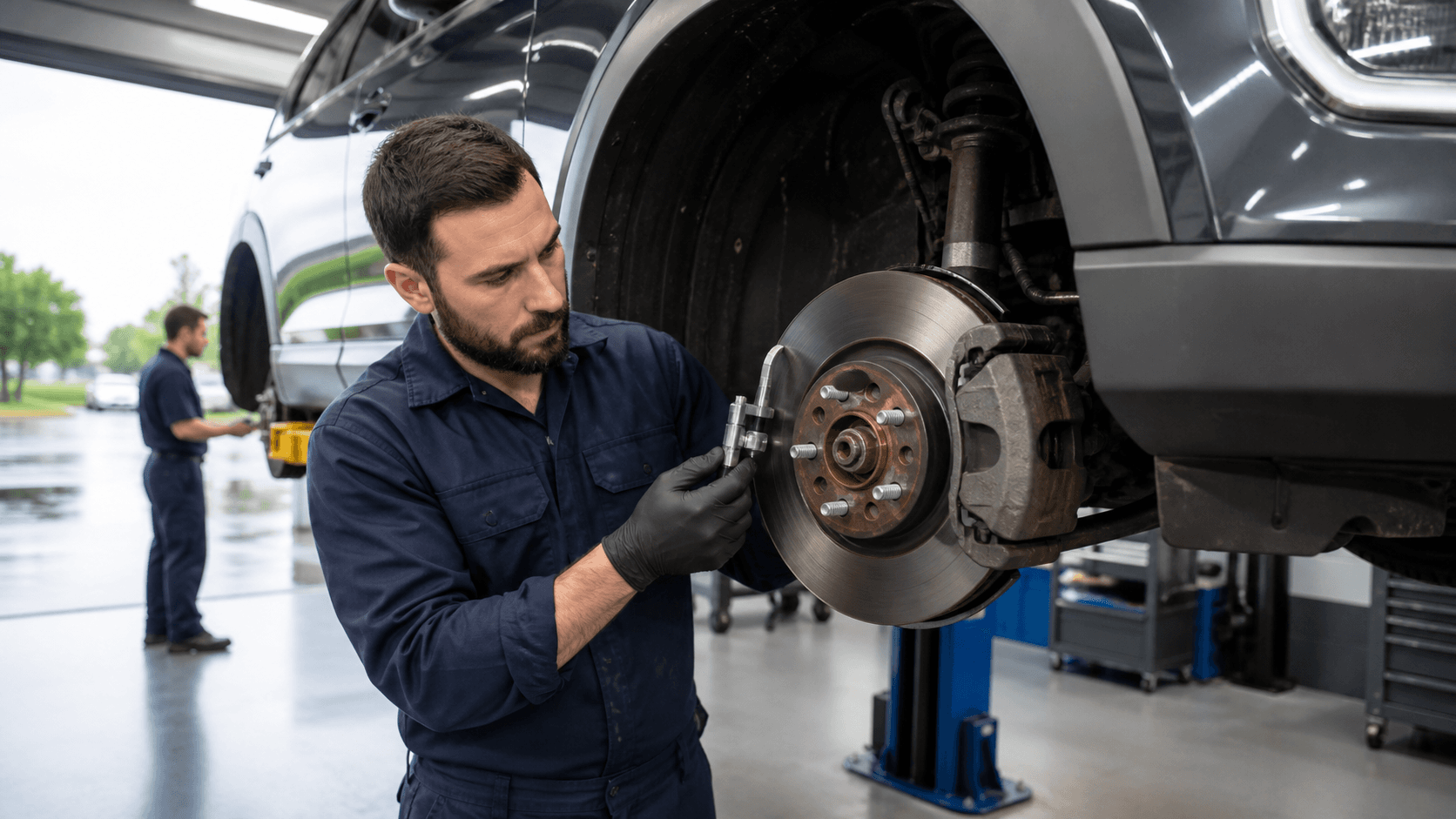
Brake repairs should match the condition of the vehicle. Depending on the findings, service may include new pads, rotor resurfacing when appropriate, rotor replacement, brake-fluid service, caliper repair, hardware replacement, or brake-line repair. Not every concern needs every service, and worn pads do not automatically mean the rotors need to be replaced.
Ford models can have different brake layouts, electronic parking brake procedures, warning systems, and repair requirements. A dealership team can refer to manufacturer repair information and use suitable diagnostic tools while evaluating the concern. Before approving work, it is reasonable to ask about measured pad thickness, rotor condition, fluid findings, labor needs, available parts options, and which items are safety priorities.
Waiting too long can sometimes allow a smaller concern to affect more parts. On the other hand, replacing parts before they are worn or confirmed faulty is not the right answer either. Clear inspection results, not assumptions, are what should guide the repair.
Frequently Asked Questions
Why do my brakes make noise after it rains?
Light surface rust can form on rotors after rain, a car wash, or a damp night, which may cause a brief squeal that goes away after a few normal stops. This is common and not automatically a sign of a problem. Noise that continues well beyond the first few stops is worth having checked.
What's the difference between squealing and grinding brakes?
Squealing that continues after several stops can point to worn brake pads, loose hardware, or another issue that needs inspection. Grinding or scraping is more urgent, since it can mean the pad material is severely worn and metal parts are contacting each other.
What does a soft or spongy brake pedal mean?
A soft, spongy, sinking, or unusually hard pedal is not normal wear and should be inspected. It may involve brake fluid, air in the hydraulic system, a brake booster, or another component, so a hands-on evaluation is the only way to confirm the cause.
What's the difference between the red brake warning light and the ABS light?
The red brake warning light can mean the parking brake is still engaged, brake fluid is low, or there is a concern within the braking system, and it should prompt a check if it stays on. The ABS light relates specifically to the anti-lock system; standard braking is generally still available, but the anti-lock function may not engage during hard stops. If both lights come on together, stop driving and arrange prompt professional evaluation.
How often should Ford brakes be inspected?
There isn't a single mileage that fits every Ford, driving style, and set of road conditions. A brake check makes sense any time you notice noise, a pedal change, pulling, vibration, or a warning light, and oil changes or tire rotations can be convenient times to ask about brake condition in between.
Do worn brake pads always mean the rotors need to be replaced too?
Not necessarily. Depending on what an inspection finds, rotors may be resurfaced, replaced, or left as-is if they're still within specification. A brake inspection is meant to identify what the vehicle actually needs rather than assuming every pad replacement requires new rotors.
Keep Your Whole Vehicle Ready for Wet Roads
If you notice persistent brake noise, vibration, pulling, a pedal change, or a warning light, a brake check can bring useful answers before wet roads put more demand on the vehicle. Oil changes and tire rotations can also be convenient times to ask about brake condition.
At Jim Norton Ford, ourservice department can inspect braking concerns and explain the condition found. Brakes work alongside tires, traction systems, windshield wipers, exterior lights, and attentive driving, so checking each of these areas before rain becomes more frequent supports better visibility, control, and confidence behind the wheel.
Schedule a Ford Brake Inspection in Broken Arrow
At Jim Norton Ford, our service team can inspect your brakes and explain what they find before recommending any repair. If you've noticed squealing, grinding, a pedal change, pulling, vibration, or a warning light,schedule a service appointment online, orcontact us with questions.